Many CPAP users describe feeling tired in ways that are hard to explain.
Some say:
- My body feels exhausted.
- My muscles feel heavy.
Others say:
- My brain feels slow.
- I can’t focus even when I’m not physically tired.
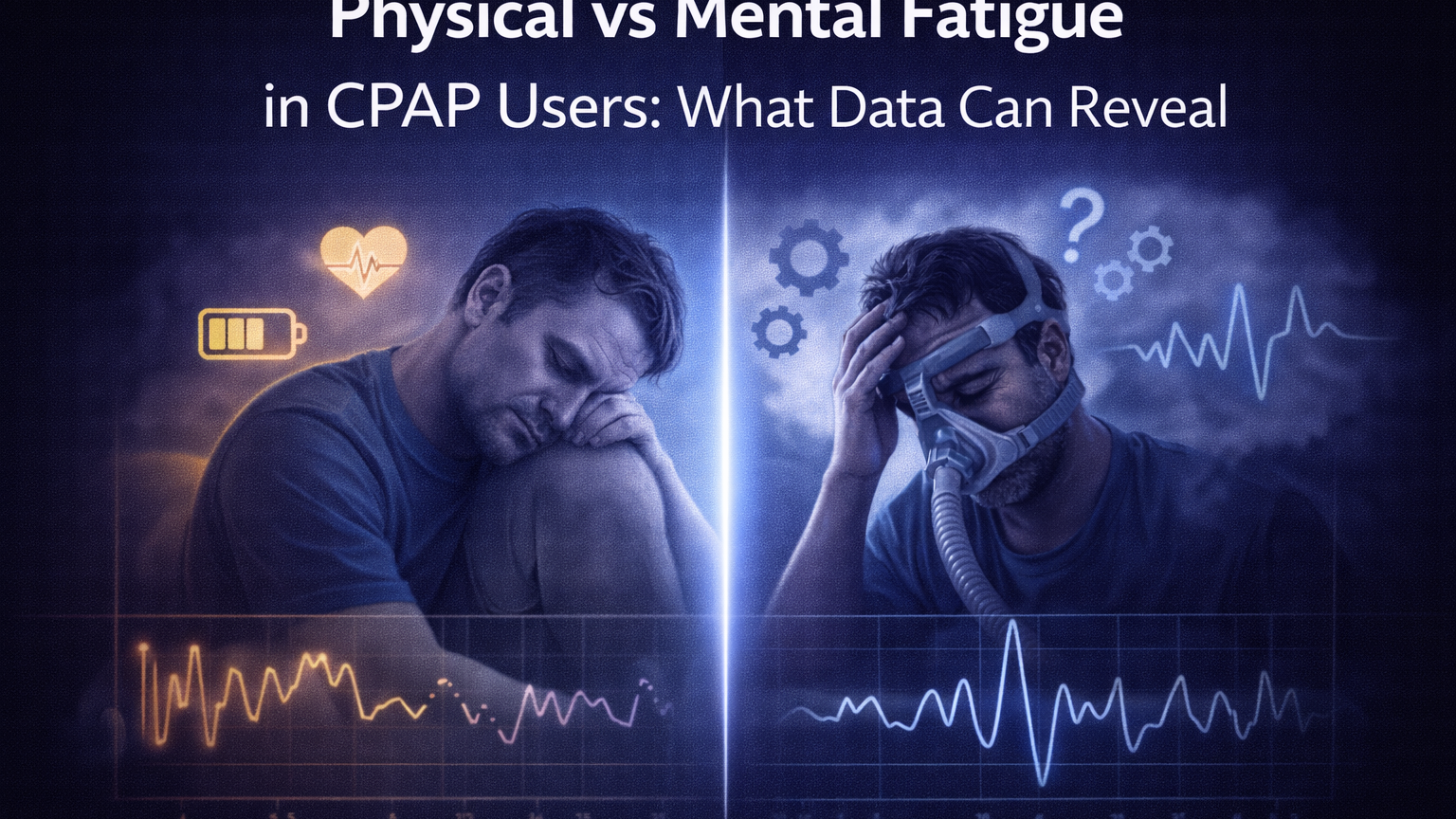
Both experiences fall under the word fatigue, but they are not the same—and CPAP data can sometimes help explain the difference.
Why Fatigue Isn’t One Single Thing
Fatigue is often treated as a single symptom, but it’s better understood as multiple overlapping experiences.
Two of the most common types CPAP users report are:
- Physical fatigue – the body feels drained
- Mental fatigue – the mind feels foggy or overwhelmed
They can occur together—or independently.
Physical Fatigue: When the Body Feels Depleted
Physical fatigue is often described as:
- Heavy limbs
- Low physical stamina
- Feeling worn out after minimal activity
In CPAP users, this type of fatigue is commonly associated with:
- Long-term sleep disruption
- Inadequate restorative sleep
- Repeated nighttime stress on the body
Even after CPAP begins, physical recovery can take time.
Mental Fatigue: When the Brain Feels Overworked
Mental fatigue is often described as:
- Difficulty concentrating
- Slower thinking
- Reduced motivation
- Sensitivity to stress
This type of fatigue is closely linked to:
- Sleep fragmentation
- Reduced REM sleep
- Ongoing nighttime arousals
Mental fatigue can persist even when physical energy starts to return.
Why CPAP Can Improve One Type of Fatigue Before the Other
It’s common for CPAP users to notice:
- Physical stamina improving first
- Mental clarity lagging behind
This doesn’t mean therapy isn’t working. It reflects how different systems recover at different speeds.
What CPAP Data Can (and Can’t) Show
CPAP data doesn’t measure fatigue directly—but it can provide context.
It may help reveal:
- How stable breathing is overnight
- Whether sleep appears fragmented
- How consistent nights are over time
It cannot:
- Diagnose fatigue
- Explain every symptom
- Replace how you actually feel
Data is a lens—not a verdict.
Patterns Often Associated With Ongoing Mental Fatigue
While individual experience varies, mental fatigue is often reported alongside:
- Low AHI but ongoing sleep disruption
- Subtle breathing irregularities
- Night-to-night variability
These patterns may not look alarming on a single night—but can add up over time.
Physical Fatigue and Recovery Trends
Physical fatigue often improves as:
- Sleep becomes more consistent
- Long stretches of uninterrupted sleep increase
- The body experiences less nightly stress
Progress is often gradual and uneven.
Why Listening to Both Body and Mind Matters
It’s possible for CPAP data to look “good” while one type of fatigue persists.
This is why many users benefit from:
- Looking at trends instead of single nights
- Not treating AHI as the final answer
- Paying attention to how fatigue shows up
Using Data to Ask Better Questions
Rather than asking:
Why am I still tired?
It can be more helpful to ask:
- Is my fatigue physical, mental, or both?
- Is my sleep becoming more stable over time?
- Do my symptoms change with consistency?
SleepLink helps CPAP users explore these questions by focusing on patterns and trends—so fatigue feels less confusing and more understandable.
The Takeaway
Fatigue in CPAP users isn’t one-size-fits-all.
Physical and mental fatigue can improve on different timelines, even with consistent therapy. Understanding the difference can reduce frustration and help set more realistic expectations.
Better insight often starts with separating how the body feels from how the mind feels.
Want to Better Understand Your Fatigue Patterns?
👉 Visit https://sleeplink.app to explore how your sleep data changes over time—and what it may reveal about recovery.