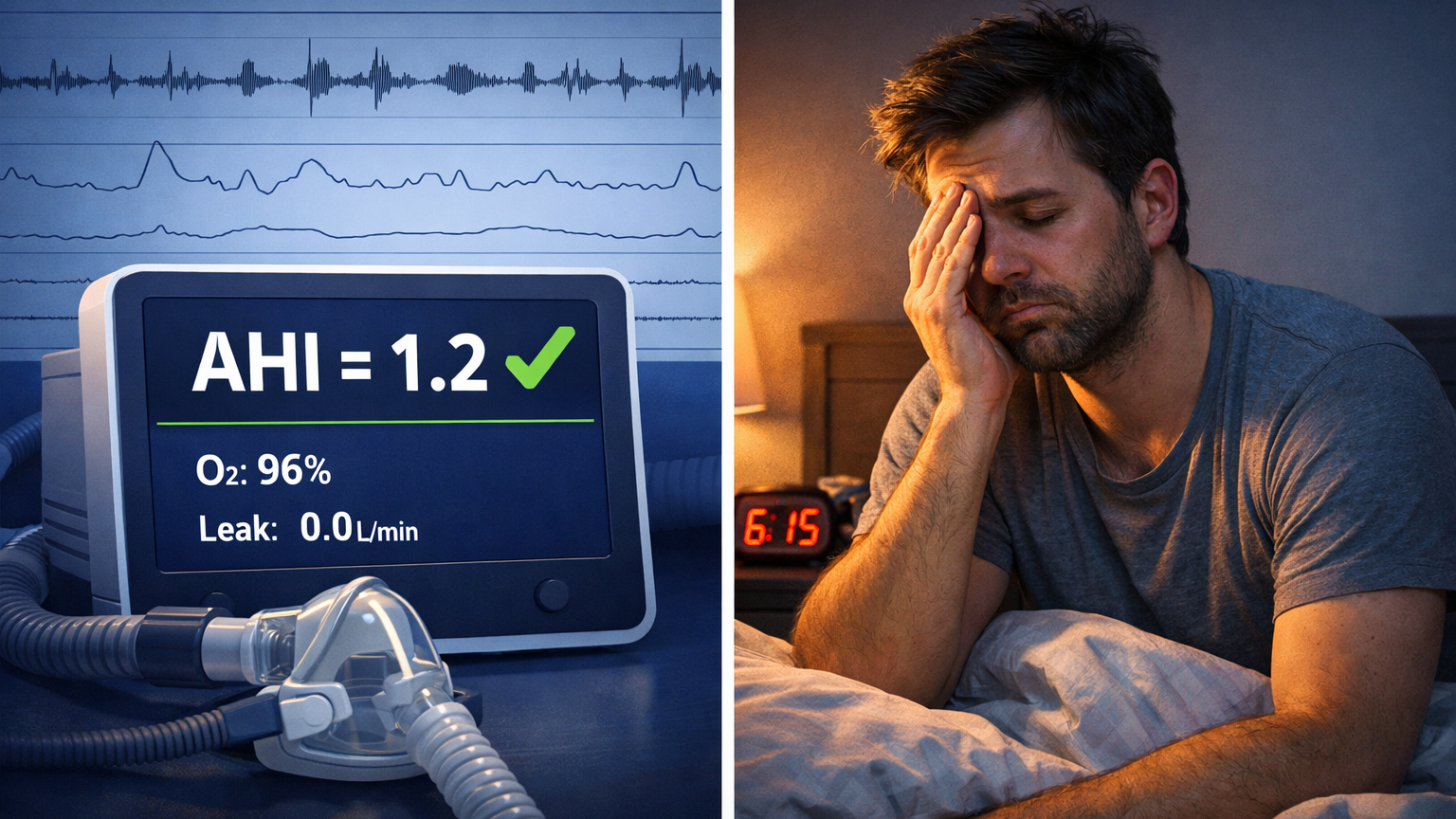
If you wake up tired despite using CPAP every night and your AHI looks fine you’re not alone.
Many CPAP users experience a frustrating gap between what the numbers say and how they actually feel. One of the most common (and least understood) reasons is flow limitation.
Flow limitation rarely shows up as a clear alarm. It doesn’t always increase AHI. And yet, it can quietly fragment sleep night after night.
This article explains what flow limitation is, how it affects sleep quality, how it appears in CPAP data, and why understanding it can be a turning point for many users.
What Is Flow Limitation?
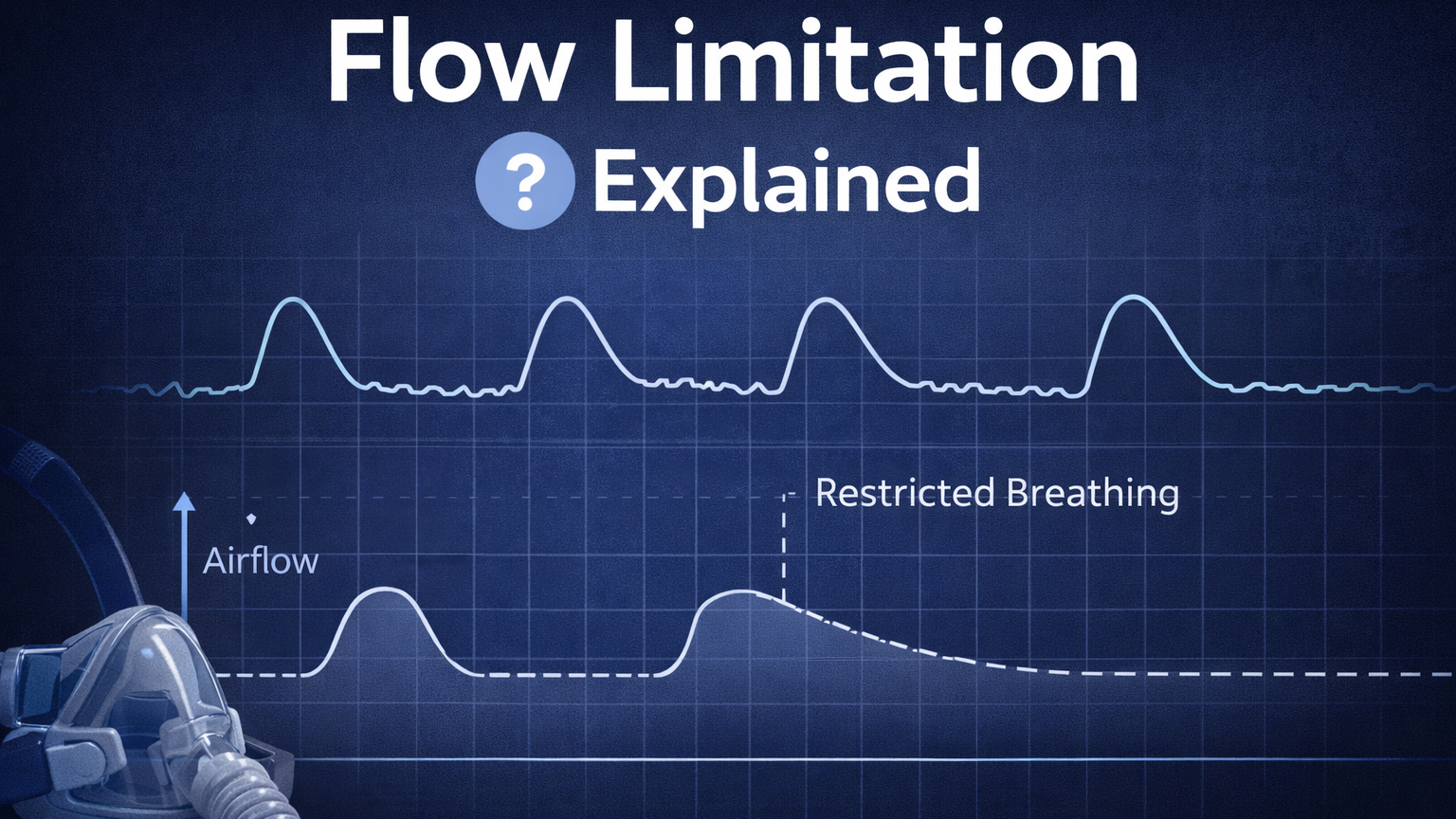
Flow limitation occurs when your upper airway becomes partially narrowed, restricting airflow—but not enough to qualify as an apnea or hypopnea.
In simple terms:
- You are still breathing
- Air is still moving
- But your body has to work harder to pull that air in
Because airflow never drops below scoring thresholds, these events often don’t count toward AHI.
Why Flow Limitation Matters (Even With a Low AHI)
Your brain is extremely sensitive to breathing effort.
When airflow is restricted:
- Breathing becomes less efficient
- Carbon dioxide clearance is slightly impaired
- The nervous system becomes more alert
This often leads to micro-arousals—brief awakenings you don’t remember, but that interrupt deep and REM sleep.
Over time, this can result in:
- Non-restorative sleep
- Morning fatigue or brain fog
- Feeling “wired but tired”
All while your AHI remains below 5.
Flow Limitation vs Apneas and Hypopneas
MetricWhat It MeasuresWhy It’s DifferentApnea | Breathing stops | Obvious airflow collapse
Hypopnea | Reduced airflow | Meets scoring thresholds
Flow Limitation | Restricted airflow | Below scoring thresholds
Flow limitation lives in the gray zone—too subtle for traditional event counting, but significant enough to disturb sleep.
How Flow Limitation Appears in CPAP Data
Depending on your machine, flow limitation may appear as:
- A dedicated flow limitation graph (e.g. ResMed)
- Flattened or scooped inspiratory waveforms
- Increased pressure responses without clear events
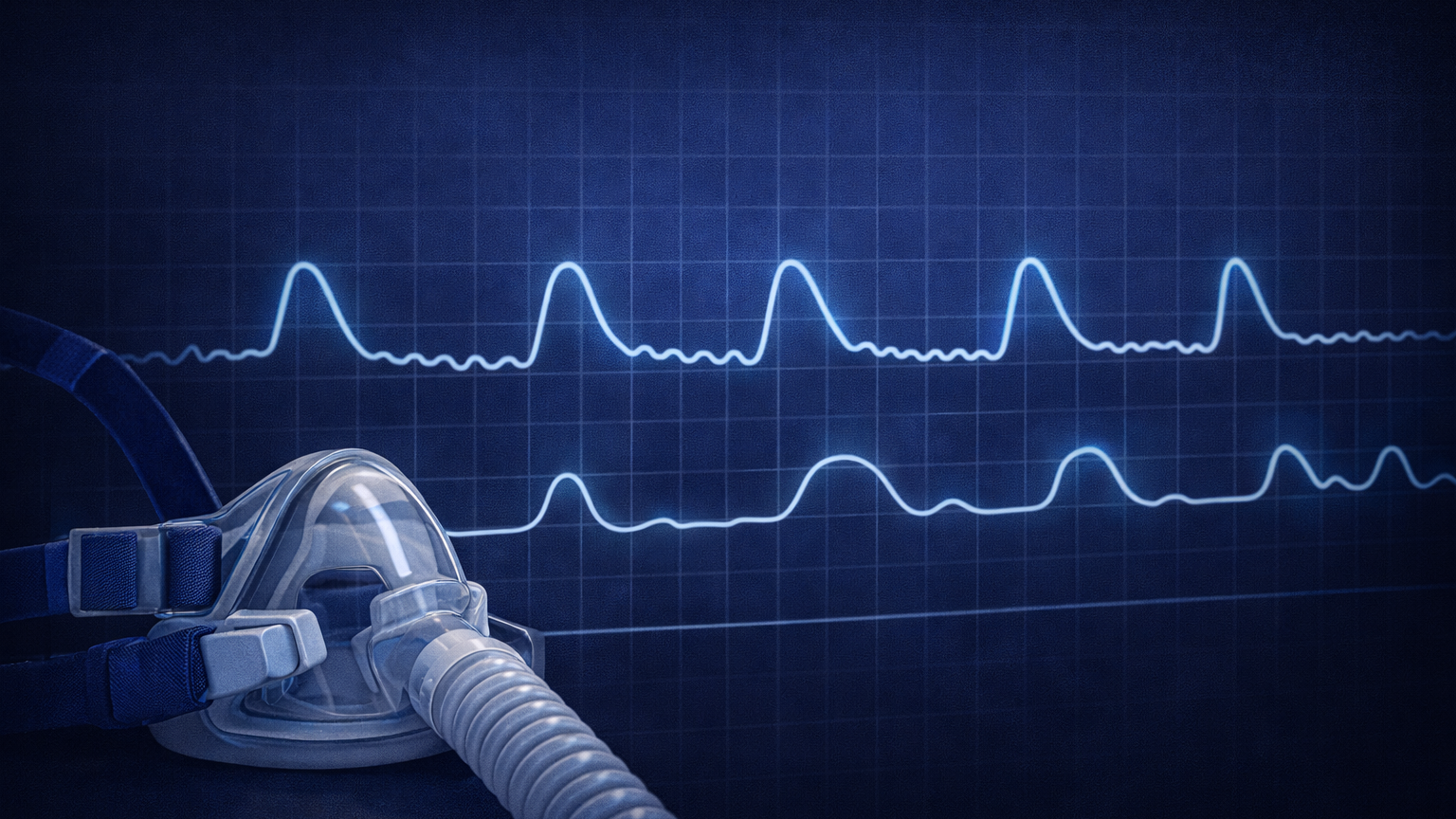
On flow rate graphs, flow limitation often looks like:
- A flattened top on the inhalation curve
- Uneven or jagged breathing cycles
- Repeated patterns rather than isolated events
These patterns matter most when they are persistent, not occasional.
Why Some CPAP Users Are More Affected
Flow limitation is especially common in:
- People with narrow or collapsible airways
- Users with UARS-like breathing patterns
- Side sleepers with positional restriction
- CPAP users sensitive to pressure or airflow changes
For these users, sleep quality may depend more on breathing smoothness than on event suppression alone.
Why Lowering AHI Doesn’t Always Fix Flow Limitation
A common reaction is to increase pressure or aggressively tune settings to eliminate all events.
Sometimes this helps. Other times it:
- Increases arousals
- Creates pressure-induced awakenings
- Disrupts natural breathing rhythm
Flow limitation is about how you breathe, not just whether you stop breathing.
What to Look for Instead of a Single Number
To understand whether flow limitation is affecting you, it’s more useful to look at:
- Trends across nights
- Consistency of waveform shape
- Correlation with how you feel
- Pressure behavior in response to subtle changes
No single metric tells the full story.
Turning Data Into Understanding
Flow limitation is one of the clearest examples of why CPAP therapy isn’t just about compliance or thresholds.
It’s about sleep quality.
Tools like SleepLink help analyze CPAP data beyond AHI, making patterns like flow limitation easier to understand and track over time—so you can stop guessing and start learning from your own sleep.
The Takeaway
If your AHI is low but your sleep still feels shallow or unrefreshing, flow limitation is worth understanding.
It doesn’t mean your therapy is failing—but it may explain why the numbers don’t match how you feel.
Better sleep often starts not with more pressure or more rules—but with better insight.
Want to See the Full Picture?
Explore your CPAP data with clarity.
👉 Visit https://sleeplink.app to learn how SleepLink helps CPAP users understand what their data is really saying.