If you or your partner still hear snoring while you’re using CPAP, it can feel discouraging.
After all, CPAP is supposed to stop snoring. So when it continues, many users assume something is wrong with their therapy.
The reality is more nuanced.
Snoring on CPAP doesn’t always mean treatment failure—but it does carry useful information about airway stability, breathing patterns, and sleep quality. Understanding what kind of snoring you’re experiencing (and how it shows up in your data) can help you make sense of nights that don’t feel as restful as they should.
What Snoring Actually Is
Snoring is caused by vibration of soft tissue in the upper airway as air passes through a narrowed space.
It exists on a spectrum:
- Fully open airway → silent breathing
- Mild narrowing → vibration (snoring)
- Severe narrowing → flow limitation, hypopneas, or apneas
CPAP reduces airway collapse—but it doesn’t always eliminate every narrowing event.
Why Snoring Can Happen Even on CPAP
1. Partial Airway Narrowing
CPAP pressure may be enough to prevent full collapse, but not enough to fully stabilize the airway.
This often results in:
- Vibratory snore
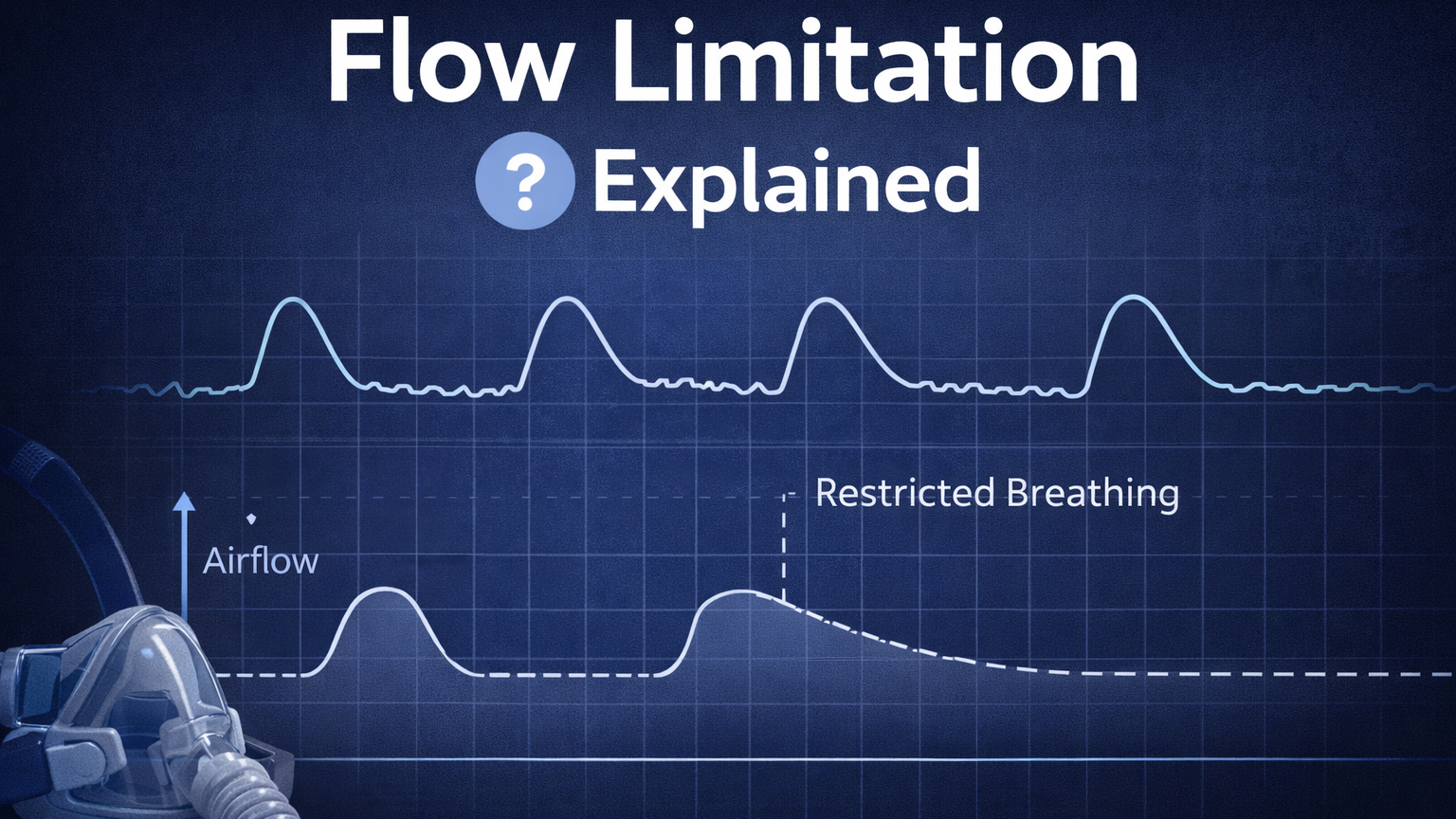
- Flow limitation
- Subtle breathing resistance
These events may not increase AHI, but they can still disturb sleep.
2. Positional or Sleep-Stage Effects
Snoring can appear or disappear depending on:
- Sleep position (especially back sleeping)
- REM sleep, when muscles relax further
- Neck or jaw positioning
This explains why snoring may occur only during specific parts of the night.
3. Mask and Leak Dynamics
Certain leaks can change airflow direction and turbulence, contributing to vibration or noise.
Importantly:
- Not all snoring is caused by leaks
- Not all leaks cause snoring
Context matters.
Snoring vs Apneas: Why AHI May Stay Low
AHI only counts events that meet defined airflow reduction thresholds.
Snoring events:
- Often don’t reduce airflow enough
- Don’t last long enough
- Don’t trigger event flags
This is why you can have:
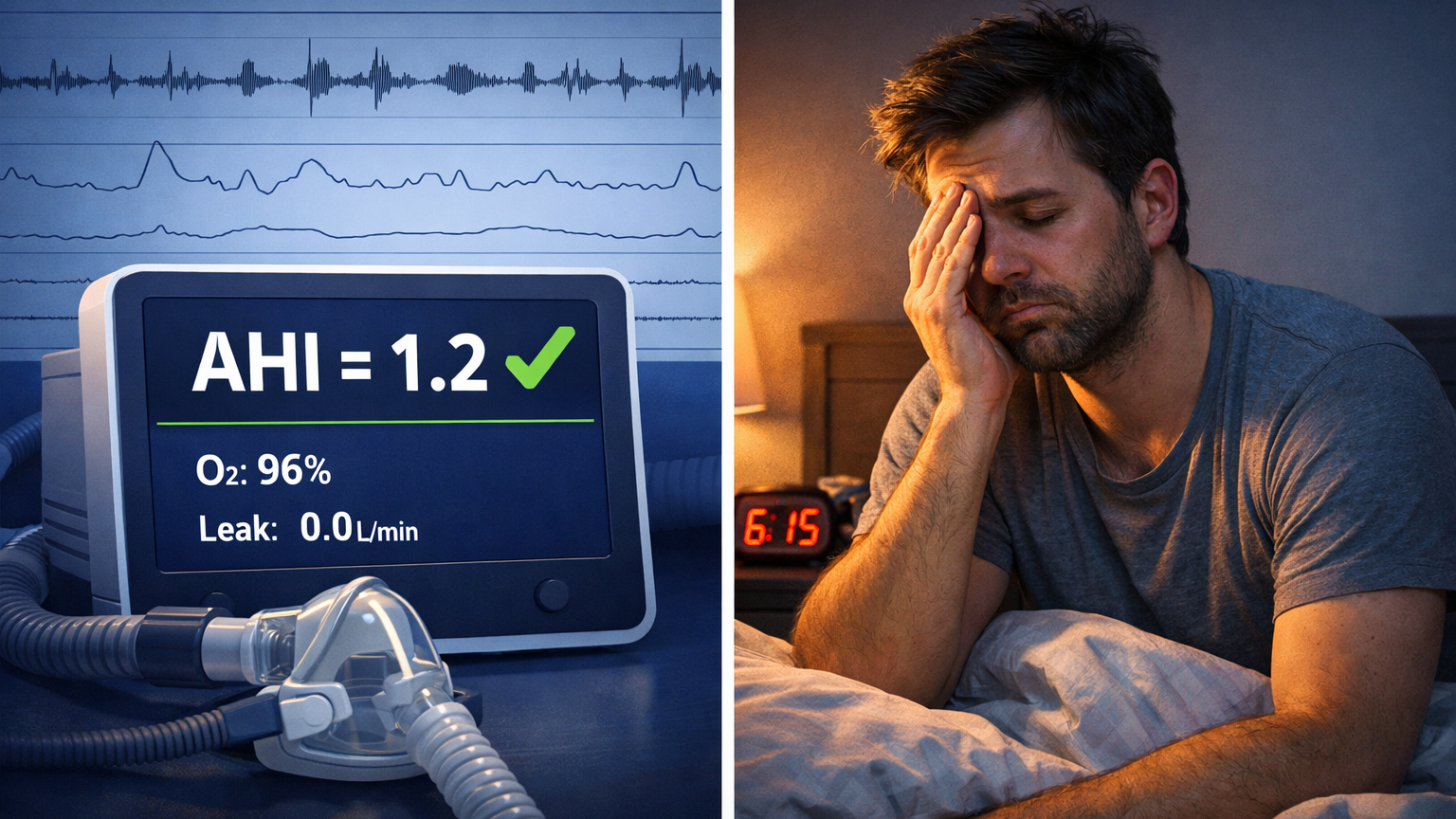
- AHI below 2
- No large apneas
- Ongoing snoring or vibration
And still wake up feeling unrested.
How Snoring Appears in CPAP Data
Depending on your device, snoring may show up as:
- A dedicated snore or vibration graph
- Pressure increases without clear events
- Flattened or irregular flow waveforms
In flow rate data, snoring often coincides with:
- Slightly flattened inhalation
- Small, rapid oscillations
- Repeating clusters rather than isolated moments
Patterns across nights matter more than a single spike.
When Snoring Is Likely Benign
Occasional snoring may not be a concern if:
- It’s brief
- It doesn’t repeat nightly
- You feel rested
- Other breathing patterns are stable
Perfect silence is not required for healthy sleep.
When Snoring May Be Worth Paying Attention To
Snoring is more likely to affect sleep quality when it is:
- Persistent across nights
- Clustered during long periods
- Associated with flow limitation patterns
- Correlated with fatigue or brain fog
In these cases, snoring can be a signal, not a problem by itself.
Why Eliminating Snoring Isn’t Always the Goal
Chasing absolute silence can sometimes backfire—especially if it leads to aggressive pressure changes that disrupt sleep.
The real goal is:
- Stable breathing
- Minimal arousals
- Restorative sleep
Snoring should be evaluated in context, not in isolation.
Turning Snoring Data Into Insight
Snoring becomes meaningful when viewed alongside:
- Flow limitation trends
- Waveform stability
- Pressure behavior
- How you feel the next day
SleepLink helps CPAP users understand snoring as part of the bigger picture—rather than as a standalone alarm—so patterns become clearer and guesswork is reduced.
The Takeaway
Snoring on CPAP doesn’t automatically mean failure.
It often reflects partial airway instability—something that can influence sleep quality even when AHI looks good.
Understanding when snoring matters, and when it doesn’t, is a key step toward more confident and informed CPAP use.
Want to Understand Your Snoring Patterns Better?
👉 Visit https://sleeplink.app to explore how your CPAP data fits together—and what it may be telling you about your sleep.