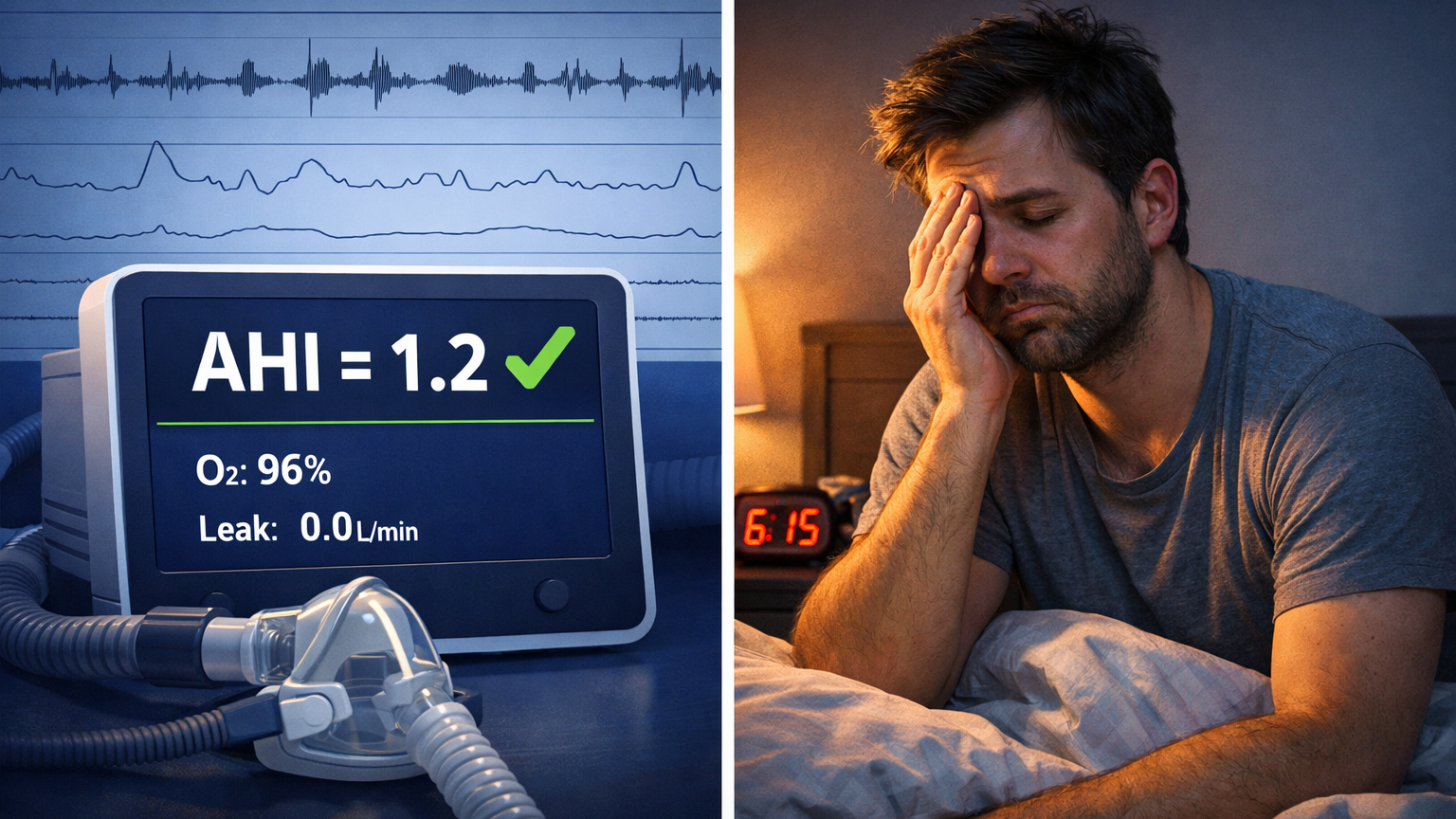
If you’ve ever looked at your CPAP charts and wondered, “Is this actually good?” you’re not alone.
Most CPAP users are taught how to spot bad events like apneas and hypopneas. But very few are taught what healthy, stable breathing actually looks like. As a result, many people chase lower numbers without knowing what they’re aiming for.
Understanding what healthy breathing looks like—especially in your CPAP data—can completely change how you evaluate your therapy.
Why “No Events” Doesn’t Always Mean Healthy Breathing
It’s possible to:
- Have an AHI below 2
- See zero large apneas
- Use CPAP consistently
…and still experience shallow, fragmented sleep.
That’s because healthy breathing isn’t defined only by the absence of events—it’s defined by stability, smoothness, and consistency.
The Core Traits of Healthy Breathing on CPAP
1. Smooth, Rounded Inhalation
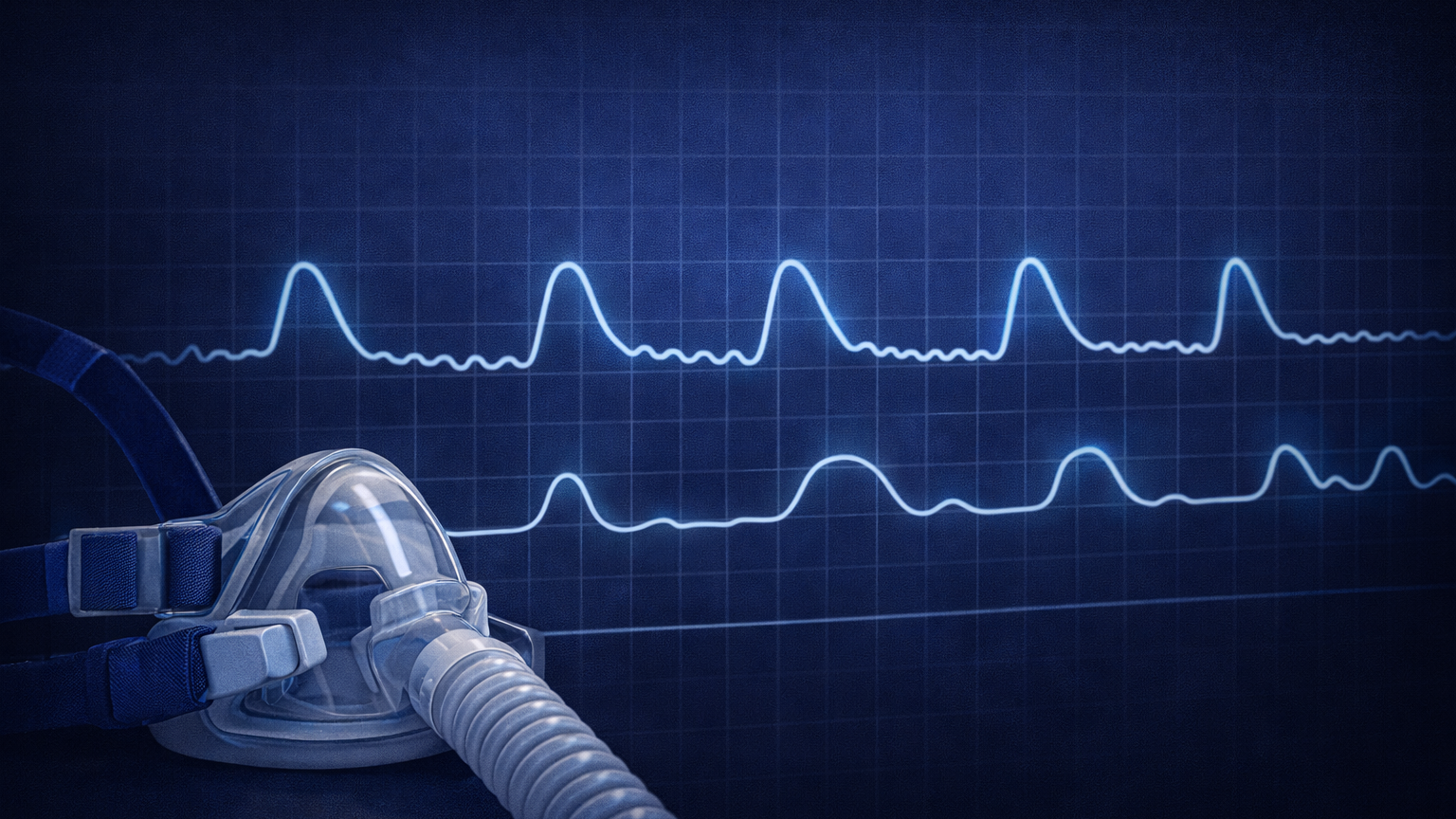
On a flow rate graph, healthy breathing usually shows:
- A smooth rise during inhalation
- A rounded or gently peaked top
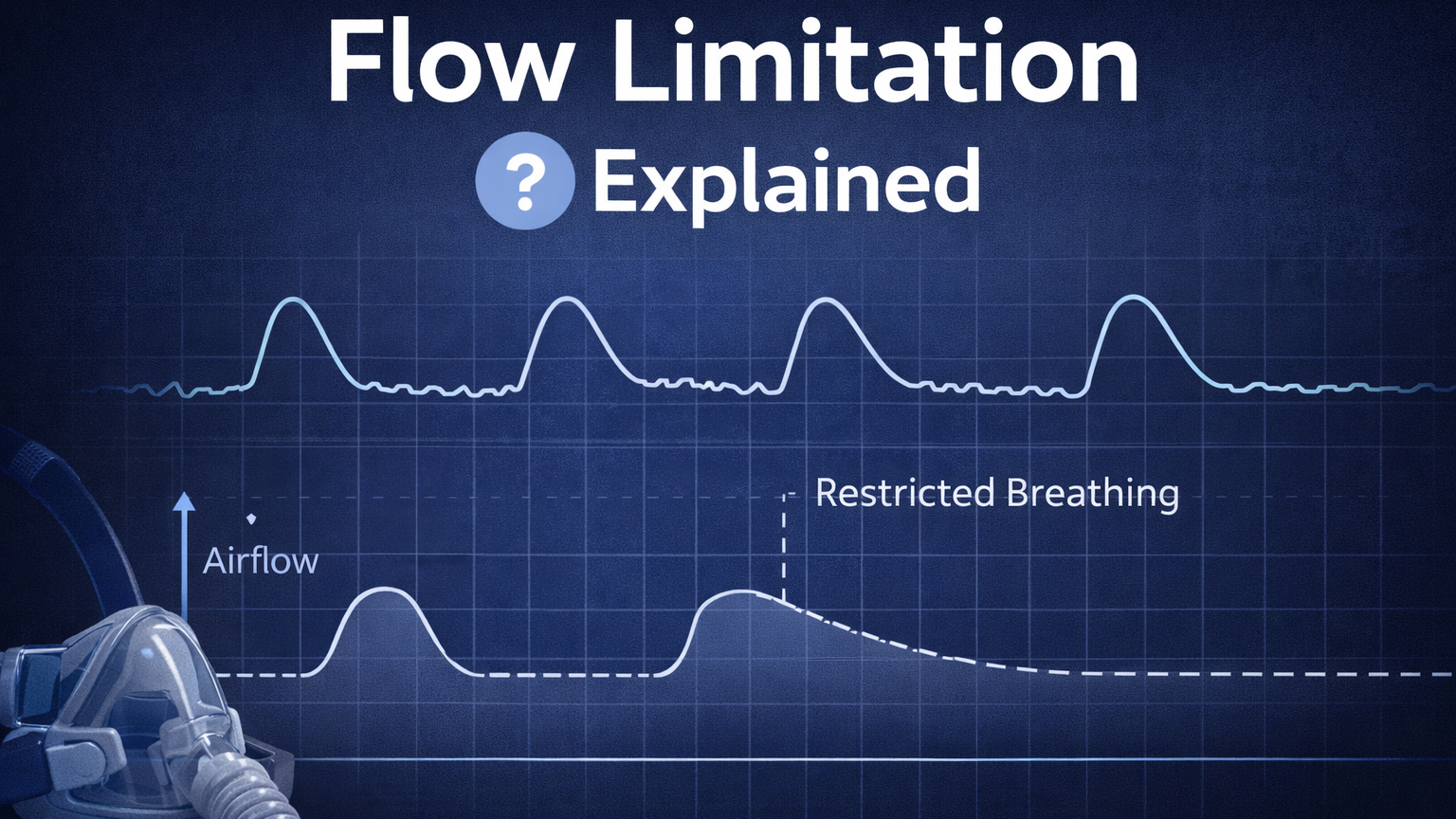
- No flattening or scooping
This indicates that air is flowing freely through the upper airway without resistance.
2. Consistent Rhythm
Healthy breathing tends to be:
- Regular
- Predictable
- Free of abrupt pauses or recovery spikes
Some natural variability is normal—but large, repeated disruptions often point to sleep instability rather than healthy rest.
3. Balanced Inhale and Exhale
In stable breathing:
- Inhalation and exhalation are proportionate
- Exhalation is relaxed, not forced
- There’s no sign of breath stacking or gasping
This balance suggests your nervous system is calm and your breathing is well-supported.
4. Minimal Pressure Chasing
Healthy breathing often corresponds with:
- Fewer sudden pressure increases
- Stable pressure over long periods
- Gentle adjustments rather than spikes
When breathing is smooth, the machine doesn’t need to “fight” to keep the airway open.
How Healthy Breathing Looks in CPAP Waveforms
When you zoom into flow rate data, healthy breathing usually appears as:
- Repeating, similar-shaped breaths
- Clean transitions between inhale and exhale
- Absence of flattened inspiratory curves
Importantly, this pattern persists across long stretches of the night, not just isolated moments.
Healthy Breathing vs. Common Problem Patterns
PatternWhat It Often IndicatesFlattened inhale | Flow limitation
Jagged breathing | Micro-arousals
Large recovery breaths | Sleep disruption
Irregular clusters | Fragmented sleep
Healthy breathing is usually boring—and that’s a good thing.
Why How You Breathe Matters More Than Single Metrics
Metrics like AHI summarize the night into a single number. Breathing patterns show you how your body experienced the night.
Two users can have the same AHI—but very different:
- Waveform stability
- Nervous system activation
- Sleep depth and recovery
This is why some CPAP users feel dramatically better than others with identical scores.
Don’t Aim for “Perfect”—Aim for Stable
It’s normal to have:
- Occasional irregular breaths
- Brief awakenings
- Minor fluctuations
Healthy sleep isn’t perfect sleep—it’s resilient sleep.
The goal is long stretches of calm, efficient breathing that allow your brain to stay asleep.
Turning CPAP Data Into Understanding
Recognizing healthy breathing patterns takes context and trend analysis—not guesswork.
SleepLink helps CPAP users move beyond event counting by making breathing stability, patterns, and night-to-night consistency easier to understand.
Instead of asking, “Is my AHI low enough?”, you can start asking:
“Is my breathing stable enough to support real rest?”
The Takeaway
Healthy breathing on CPAP is:
- Smooth
- Stable
- Consistent
- Calm
It doesn’t always show up as a headline number—but it shows up in how you feel.
Learning to recognize it is one of the most empowering steps a CPAP user can take.
Ready to See Your Breathing More Clearly?
👉 Visit https://sleeplink.app to explore your CPAP data beyond basic metrics and understand what healthy sleep really looks like.